


How Modern ENT Clinics Use Technology to Improve Sinus Treatment
For many people, a sinus appointment begins with a simple expectation: find out why they're congested. Yet one of the biggest differences between modern ENT care and the approach patients experienced years ago isn't the treatment itself—it's how today's technology helps physicians understand why symptoms are happening in the first place.
At Arizona Breathe Free Sinus & Allergy Centers, we often see patients who have been treated for recurring sinus infections or chronic congestion without ever receiving a clear explanation for what's causing those problems. Modern diagnostic technology has changed that. Instead of relying on symptoms alone, ENT specialists now have tools that allow them to see inside the nasal passages, evaluate sinus anatomy, and identify conditions that may not be obvious during a routine examination.
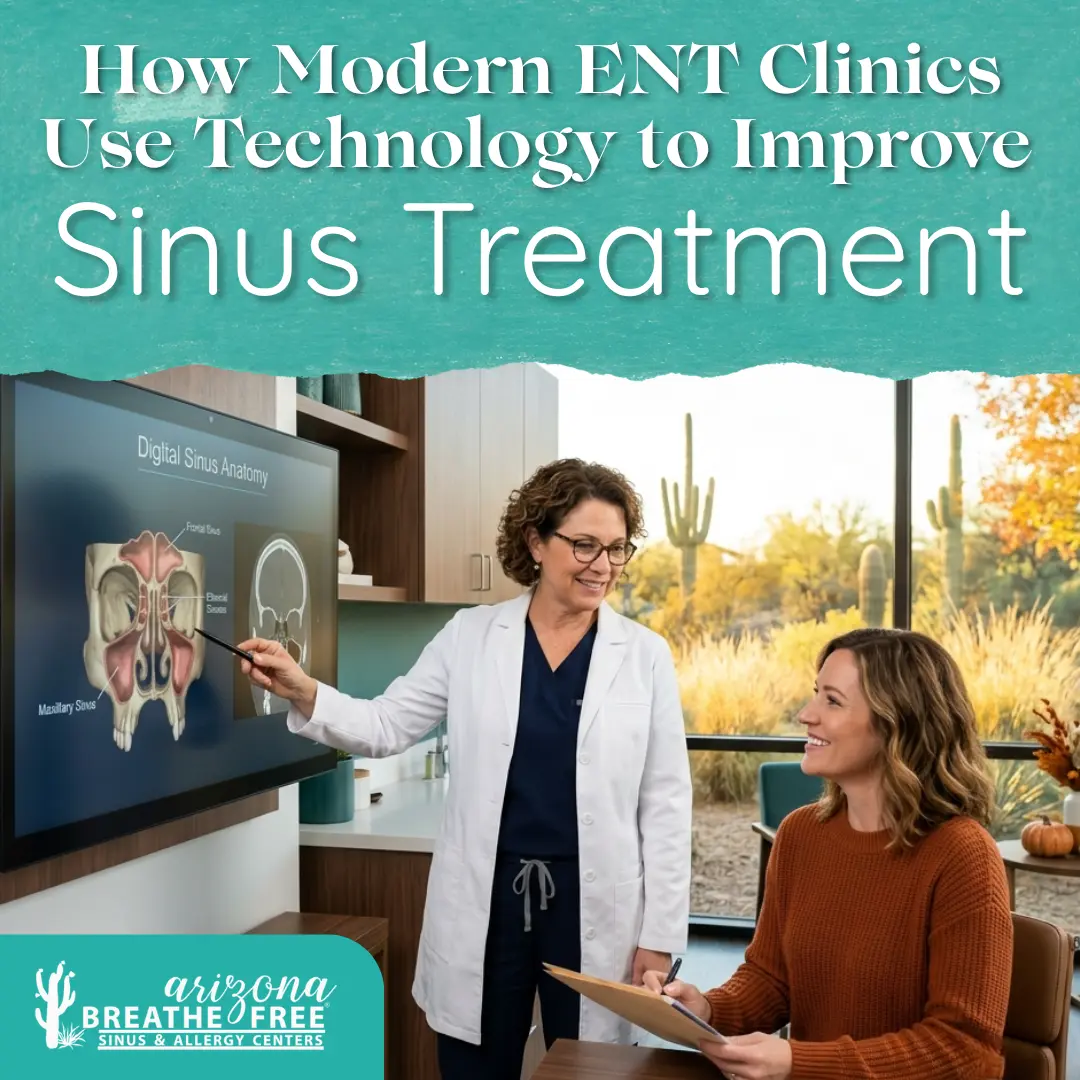
Better Diagnosis Starts with Better Visibility
Many sinus conditions produce nearly identical symptoms.
Facial pressure, nasal congestion, postnasal drip, headaches, and a reduced sense of smell can all occur with allergies, chronic sinusitis, nasal polyps, or a deviated septum.
Without looking inside the nose, those conditions can be difficult to distinguish.
Modern ENT clinics use diagnostic technology to gather additional clinical information and better understand what's contributing to a patient's symptoms before discussing treatment options.
Nasal Endoscopy Provides a Closer Look
One of the most valuable diagnostic tools available in an ENT office is nasal endoscopy.
This procedure uses a thin, flexible tube with a small camera and light to examine areas inside the nose that can't be seen during a standard examination.
A nasal endoscopy allows your ENT to evaluate:
- Signs of chronic inflammation
- Nasal polyps
- Structural abnormalities
- Areas where sinus drainage may be blocked
- Mucus patterns that may help explain persistent symptoms
Because the examination is performed in the office, it often provides immediate information that helps guide the next steps in your care.
CT Imaging Helps Map the Sinuses
Sometimes symptoms don't tell the full story.
CT imaging creates detailed images of the sinus cavities, allowing ENT specialists to evaluate the structure of your sinuses with much greater precision than a physical examination alone.
These images may help identify:
- Areas of chronic inflammation
- Blocked sinus drainage pathways
- Anatomical differences that affect airflow
- The extent of sinus disease
Rather than treating symptoms alone, CT imaging helps determine exactly where problems are occurring and how significant they may be.
Allergy Testing Identifies Hidden Triggers
Not every patient with chronic congestion has chronic sinusitis.
For some, allergies are the primary factor keeping the nasal passages inflamed.
Because Arizona's environment includes desert pollen, grasses, weeds, dust, and seasonal allergens that vary throughout the year, identifying environmental triggers can be an important part of understanding persistent symptoms.
Allergy testing helps determine whether allergic inflammation is contributing to congestion, sinus pressure, or recurring sinus infections. That information allows treatment recommendations to address the underlying cause instead of simply managing recurring flare-ups.
Technology Helps Personalize Treatment
Modern technology doesn't replace clinical judgment—it strengthens it.
The information gathered during an examination, nasal endoscopy, imaging, or allergy testing helps your ENT understand how multiple factors may be working together.
For example, one patient may have congestion caused primarily by allergies, while another may have both allergic inflammation and a deviated septum. Someone else may discover that chronic sinusitis is responsible for symptoms they believed were seasonal allergies.
The information gathered through diagnostic testing can help ENT specialists recommend treatment options that are appropriate for a patient's individual condition.
Why This Matters in Arizona
Arizona presents unique environmental challenges for the nose and sinuses.
Desert plants such as mesquite, palo verde, olive, and grasses release pollen during different times of the year, while dust storms and seasonal winds can increase exposure to airborne irritants. Dry air may also irritate the lining of the nose, making existing inflammation feel even more noticeable.
Because several factors often contribute to sinus symptoms at the same time, relying on symptoms alone may not reveal the complete cause.
Modern diagnostic tools help separate allergies from chronic sinus disease, identify structural concerns, and provide a clearer understanding of why symptoms continue.
How Do I Know It's Time to Stop Waiting and Get Checked?
Recurring congestion isn't something you should simply learn to live with.
An evaluation from an ENT specialist in Arizona may be appropriate if:
- Congestion lasts for several weeks.
- You experience recurring sinus infections.
- Facial pressure becomes a regular problem.
- Your sense of smell has noticeably decreased.
- Nasal blockage affects your sleep or daily activities.
- Previous treatments haven't provided lasting improvement.
An evaluation doesn't necessarily mean you'll need a procedure. More often, it provides the information needed to understand your condition and determine which treatment options may be appropriate.
Using Modern Technology to Evaluate Sinus Conditions
Technology has transformed the way ENT specialists evaluate sinus conditions. Rather than relying on symptoms alone, today's diagnostic tools provide a clearer understanding of what's happening inside the nose and sinuses, allowing treatment decisions to be based on accurate information instead of assumptions.
At Arizona Breathe Free Sinus & Allergy Centers, we combine advanced diagnostic technology with personalized care to help patients throughout Phoenix, Scottsdale, Gilbert, Glendale, and surrounding communities better understand persistent sinus and allergy symptoms. Contact us now to learn how modern ENT evaluations can help identify the cause of your symptoms and guide your treatment options.