


%20.webp)
Why Sinus Symptoms Feel Worse in Casa Grande's Dry Climate (And What You Can Do About It)
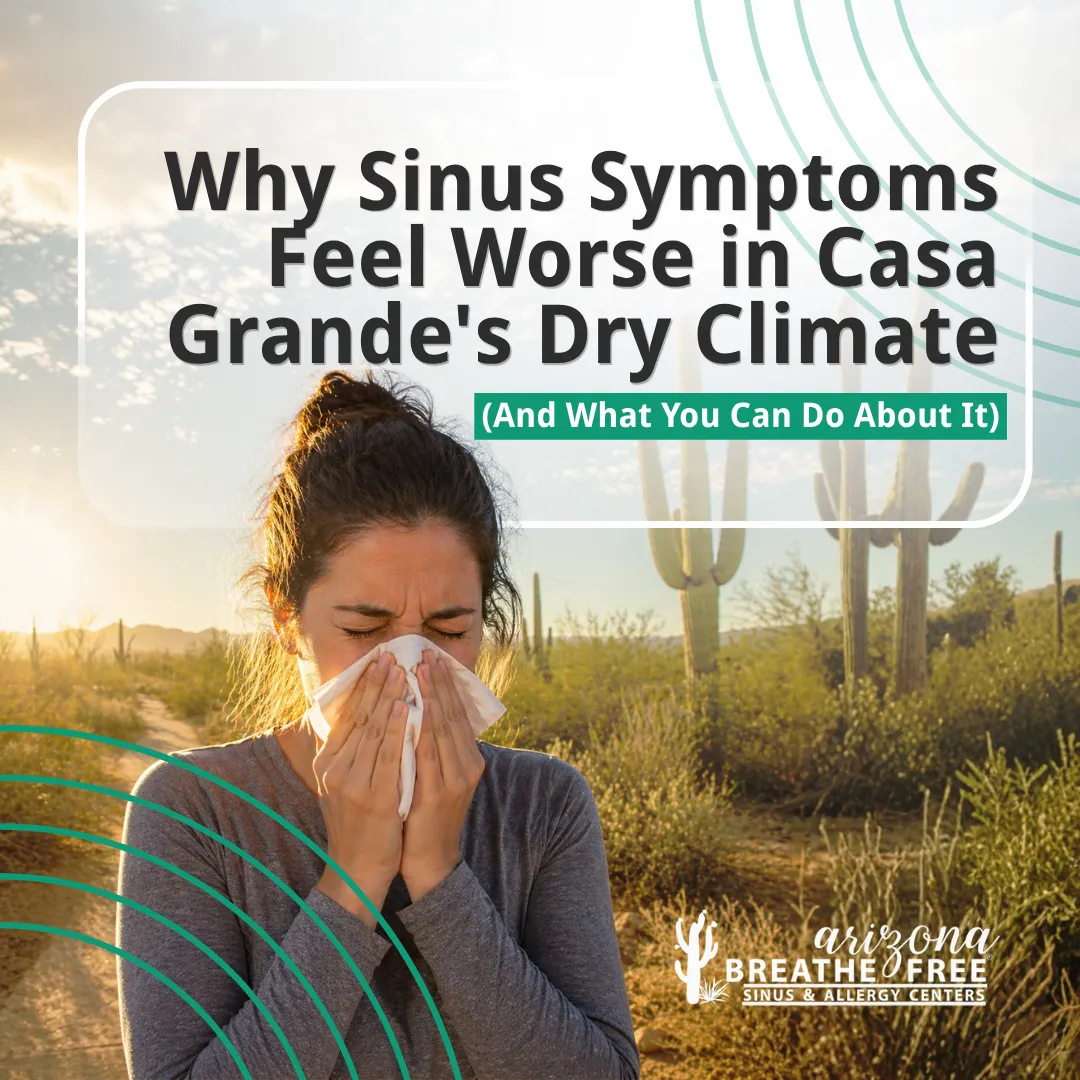
If you live in Casa Grande, you already know the air feels different here. It is hot, dry, and dusty for much of the year. That matters to your nose and sinuses. At Arizona Breathe Free Sinus & Allergy Centers, this is a common concern patients bring up: “Why do my sinuses feel more blocked, irritated, or painful when the air is so dry?” The answer is that desert air can irritate the lining of the nose, dry out mucus, and make everyday sinus problems feel stronger than they would in a milder climate.
Dry Air Can Dry Out the Nose Fast
Your nose is supposed to warm, filter, and moisten the air you breathe. To do that, it needs a healthy, moist lining. When the air is very dry, that lining can lose moisture. The nose may then feel tight, sore, or irritated. Low humidity can also bother the inside of the nose and throat, and dry air is a known trigger for runny nose symptoms in some people. That sounds strange, but irritation can make the nose react by producing extra mucus.
Thick Mucus Can Lead to More Pressure
Healthy mucus should stay thin enough to move. That movement helps clear out dust, allergens, and germs. In a dry climate, mucus can become thicker and harder to clear. When that happens, you may feel stuffy, notice more postnasal drip, or feel pressure in your cheeks, forehead, or around your eyes. Sinusitis often causes congestion, facial pressure, and thick drainage, and dry air can make those symptoms feel worse by making it harder for the nose to do its cleanup job.
Casa Grande Air Is Not Just Dry. It Can Be Dusty Too.
Casa Grande has an arid desert climate with very little rainfall and long hot periods, which means dry ground and blowing dust are part of life. Dust is not just annoying. It can irritate the nose, trigger swelling, and add to allergy symptoms. Research on desert dust also shows that dust exposure can contribute to inflammatory and allergic airway problems. So even if dry air starts the irritation, dust and outdoor particles can keep the cycle going.
Allergies May Feel Worse Too
Some people think a dry climate should mean fewer allergy issues. But dry air does not protect you from pollen, dust, or other triggers. Allergic rhinitis can cause sneezing, congestion, sinus pressure, postnasal drip, and itchy eyes or nose. If your nasal lining is already dry and irritated, even a mild allergy trigger may feel stronger. That is one reason some people in desert areas feel like they are always fighting “sinus problems” when allergies are part of the picture too.
Dryness Can Also Cause Nosebleeds and Crusting
Another common problem in dry climates is nosebleeds. Dry air can damage the nasal lining and make bleeding more likely. Crusting inside the nose can also form when mucus dries out. Then the nose feels blocked, even when the real issue is dryness rather than deep sinus swelling. If you keep getting bloody mucus, scabs, or frequent nosebleeds, the air may be part of the problem.
What You Can Do at Home
There are a few simple ways to make the nose more comfortable. A saline nasal spray can add moisture and help thin mucus. Nasal irrigation can help wash out irritants and loosen trapped mucus. A humidifier may also help, especially when indoor air feels very dry. Mayo Clinic notes that low humidity can bother the nose and throat, but humidity that is too high can support mold and dust mites, so it is best to keep indoor humidity in a moderate range, about 30% to 50%. Drinking enough fluids and limiting smoke or strong irritants may help too.
When It May Be Time for an ENT Visit
It may be time to see an ENT when sinus symptoms do not go away, keep coming back, or start affecting daily life. A visit may also help when home care is no longer giving enough relief.
- Your sinus symptoms keep returning.
- Congestion, drainage, or pressure lasts more than 12 weeks.
- Your symptoms are making it hard to sleep well.
- You have facial pain or pressure that does not improve.
- Saline spray, rest, or other basic care is not helping enough.
- You often feel blocked up and think allergies, sinus swelling, or nasal polyps may be part of the problem.
- You want a clearer answer about what is causing your symptoms.
Need Help Sorting Out Sinus Symptoms?
Living in Casa Grande means your sinuses are constantly up against the desert. Dry air, dust, and shifting seasons can leave you dealing with persistent pressure, congestion, and discomfort — and that's not something you should just push through.
At Arizona Breathe Free Sinus & Allergy Centers, we work with you to better understand potential causes of your symptoms and discuss appropriate evaluation and care options. Our team evaluates your symptoms, explains what's driving them, and walks you through the care options that make the most sense for you.
Our goal is to support your respiratory comfort and overall sinus health. If sinus issues are slowing you down, we're here to help.