


Why Do Sinus Infections Keep Coming Back?
Imagine waking up one day, and your sinuses are blocked. You have a hard time breathing through your nose. There is an unexplainable pressure in your facial and nasal area. But that’s not even the worst part. The worst part is if they don’t seem to get better, or they do get better for some time, but they keep coming back.
A consultation with an ENT doctor in Arizona can help give you a better understanding of why sinus infections seem to keep coming back.
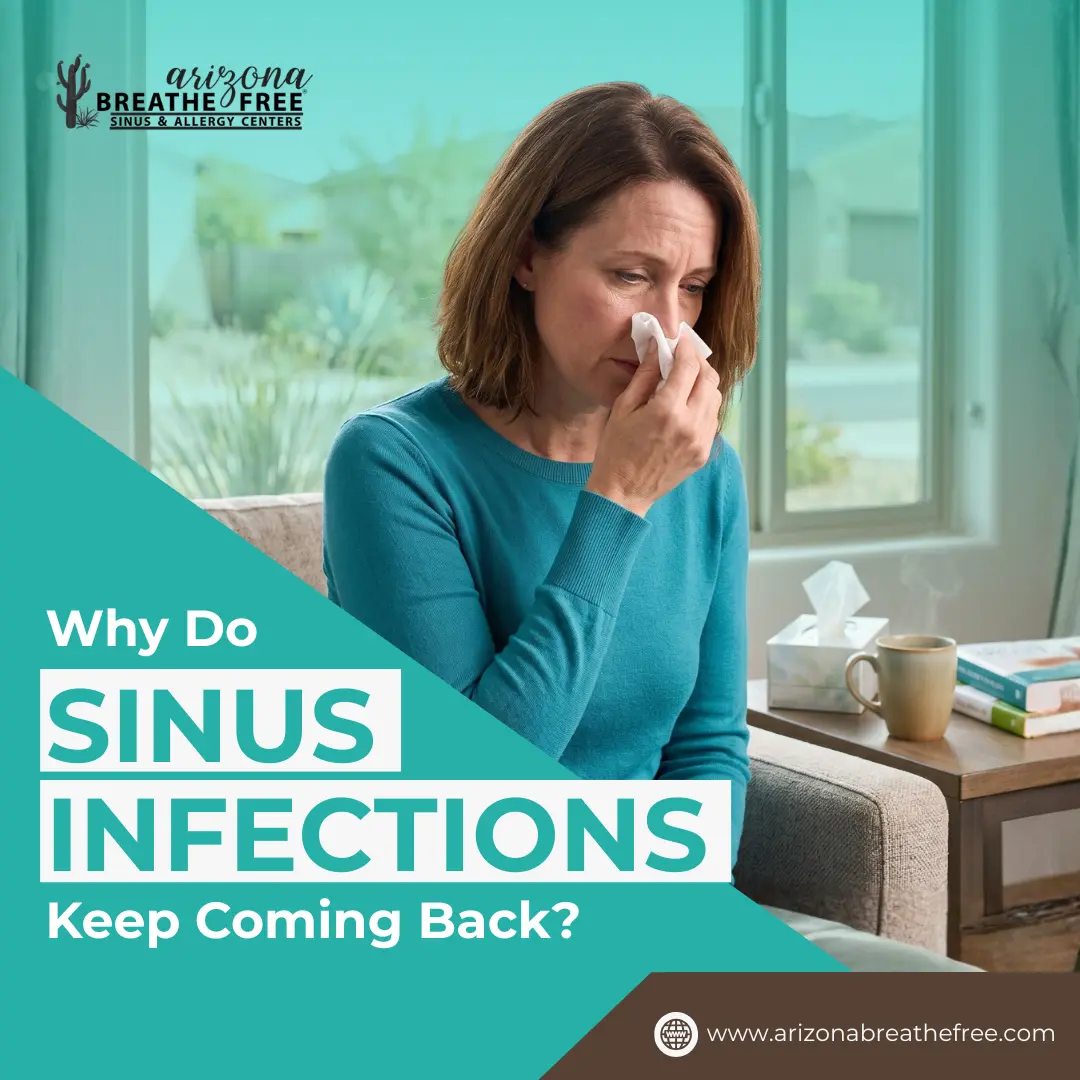
Understanding Sinusitis in Arizona
Sinusitis is characterized by the inflammation of the tissues lining the sinuses. The sinuses are hollow, air-filled spaces located behind the nose, cheeks, and forehead. They naturally produce mucus to humidify the air we breathe and remove potential irritants in the sinus passages.
When the sinuses become irritated and swollen, they may trap mucus, causing nasal congestion, breathing difficulties, and sinus pain and pressure.
Common symptoms of sinusitis include:
- Nasal congestion
- Postnasal drip, or mucus dripping down the back of the throat
- Runny nose with thick yellow or green discharge
- Facial pressure, particularly around the nose, eyes, and forehead, that gets worse when you move your head around or bend over
- Ear pain
- Tooth pain
- Cough
- Headache
- Chronic bad breath (halitosis) or a bad taste in the mouth
The common causes of sinusitis include allergens, viruses, bacteria, and fungi. Other triggers and risk factors include:
- Allergies
- Asthma
- Nasal polyps
- Deviated septum
- A weak immune system
- Smoking
Acute vs Chronic Sinusitis
There are two main forms of sinusitis:
- Acute sinusitis is a short-term infection, swelling, or irritation of the sinuses. Symptoms usually last less than four weeks and can often resolve with over-the-counter medications, rest, and proper hydration.
- Chronic sinusitis is a long-term inflammatory condition characterized by persistent swelling and irritation of the sinuses. Symptoms usually last for 12 weeks or longer and may recur frequently. It may need a different treatment approach to manage symptoms effectively.
Why Do Sinus Infections Keep Coming Back?
In many cases, symptoms of sinusitis can be manageable, and symptoms can go away with rest, hydration, and standard over-the-counter medications. However, they can keep coming back–and this can start affecting your daily life, productivity, sleep, and overall comfort.
Here are a few key reasons why you may be dealing with recurring sinus infections:
1. You’re dealing with (and ignoring) allergies
Sinusitis or sinus infections that keep coming back may be due to seasonal or environmental allergies that cause ongoing and persistent inflammation in the sinuses.
Regular exposure to common allergens such as pollen, dust mites, mold spores, and pet dander, as well as environmental irritants such as pollution, smoke, and strong scents or odors, can cause sinus infections to frequently recur or come back.
When the sinuses are constantly swollen due to irritants, it may contribute to recurring infections.
2. You have structural nasal issues
Certain structural issues in the nasal and sinus passages can block efficient airflow and trap mucus, which makes it easier for viruses and bacteria to thrive and multiply. In some cases, this may cause sinus infections to keep coming back or recur frequently.
Common structural issues that may cause recurring sinusitis include:
- Deviated septum: A deviated septum occurs when the nasal septum (the thin wall of cartilage and bone that separates the nose into left and right nostrils) is off-center and misaligned. In some cases, a deviated septum may cause persistent nasal congestion, breathing difficulties, and sinus pressure.
- Nasal polyps: Nasal polyps are soft and noncancerous (benign) growths that can form in the lining of the sinuses or nose. They can appear on one or both sides of the nose. When they become irritated and swollen, they may cause breathing difficulties and nasal congestion, and may make it difficult for the infection to fully clear up.
3. You have a weakened immune system (and other health conditions)
A weakened immune system due to an existing medical condition can mean that your body has a harder time fighting off infections. When you have a weak immune system, it may be difficult to eliminate an infection, and, in some cases, make it more likely to return and cause problems again.
Health conditions that may be risk factors include:
- Asthma, allergies, or cystic fibrosis
- Certain chronic illnesses that may suppress immune function
- Tooth infections that may spread to nearby sinuses
4. You don’t have an accurate diagnosis
Accurate diagnosis is crucial in treating sinusitis. It’s especially important if you’re dealing with an infection that doesn't seem to resolve, or one that seems to frequently come back.
A comprehensive evaluation of the sinus and nasal passages is key in understanding your symptoms and what might be causing them. If symptoms persist or recur frequently, additional evaluation may help confirm your initial diagnosis or identify other contributing factors.
5. You’re dealing with infections that don’t fully resolve
Viral illnesses such as the common cold and other respiratory infections can contribute to recurring sinus symptoms or sinus infections. If you notice that you catch a cold quite frequently, that may be a contributing factor to recurring sinus infections, because the sinuses may not have enough time to recover in between infections.
When Should I See an ENT for Chronic Sinusitis?
Consider scheduling an appointment to see an ENT specialist if you experience symptoms that last for more than 10 days or repeated sinusitis that doesn’t get better with medications.
Moreover, seek immediate medical help if you experience vision changes, facial swelling, a stiff neck, fever, or confusion.
Conclusion: Learn How to Manage Chronic Sinus Problems
Persistent or recurring sinus issues can be frustrating, especially if they start affecting daily life, productivity, sleep, and comfort.
Our clinic locations in Scottsdale, Westside, Phoenix, and Casa Grande offer sinus evaluations to help assess your symptoms and guide you toward individualized treatment and care plans.
Schedule a sinus evaluation today.