


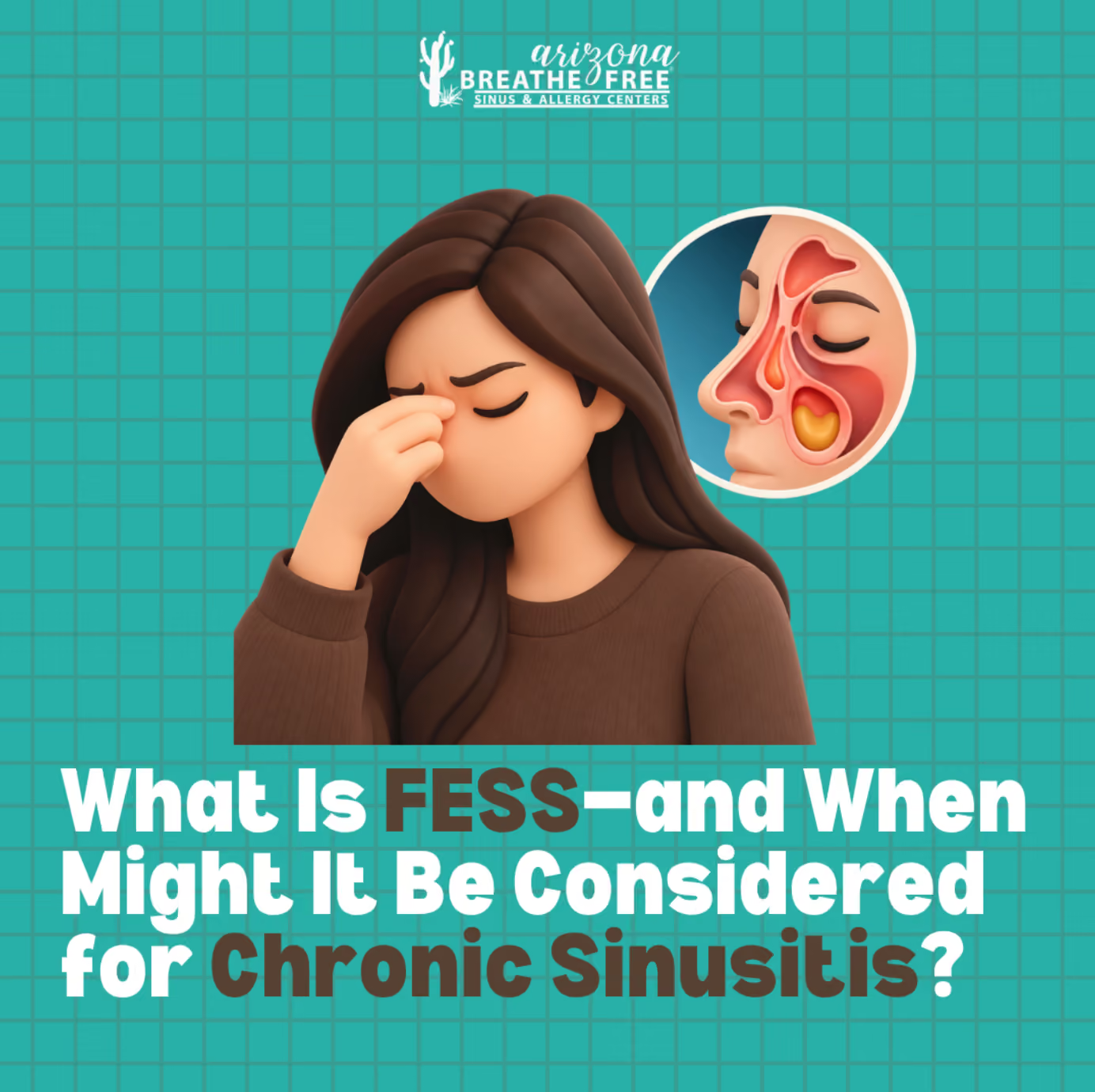
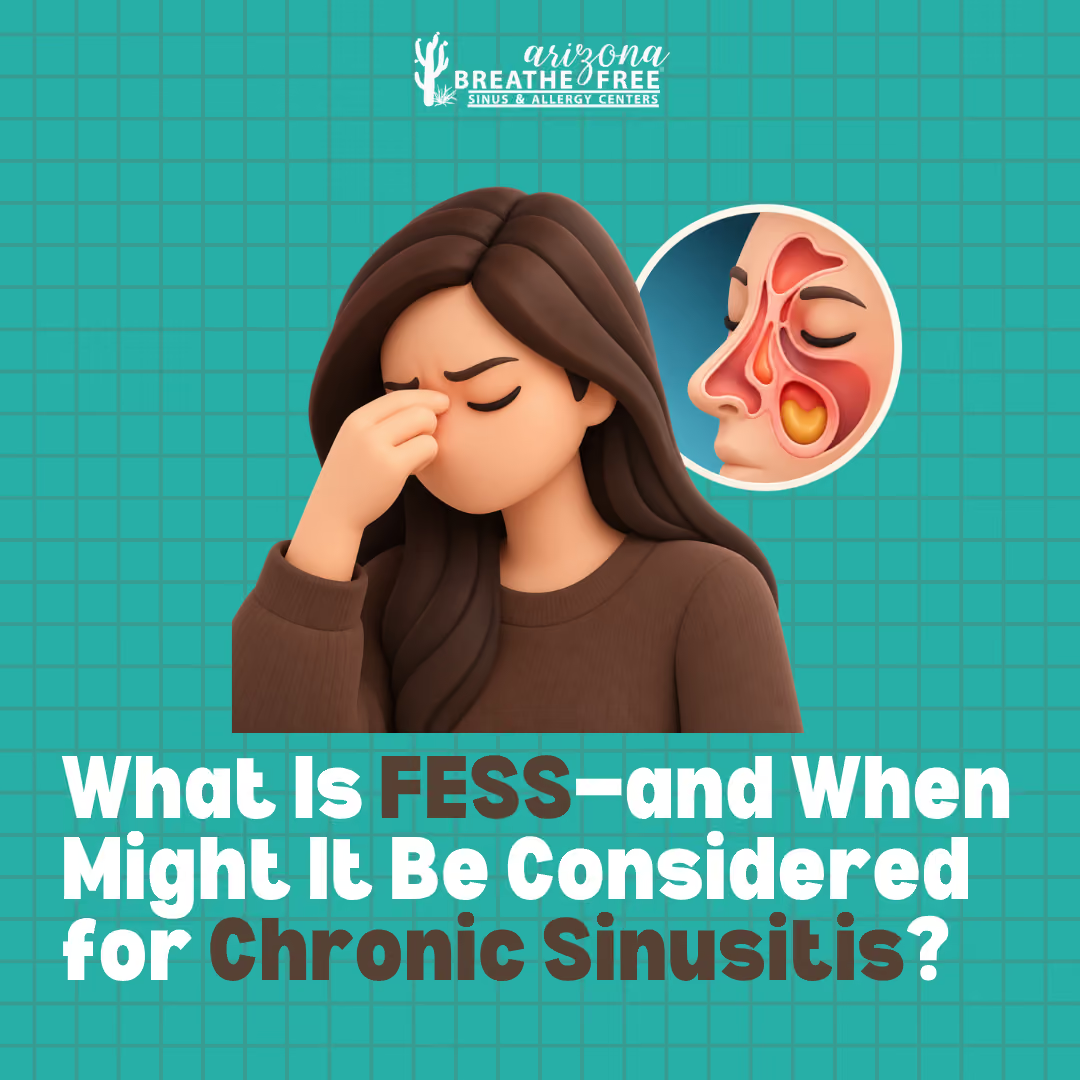
What Is FESS—and When Might It Be Considered for Chronic Sinusitis?
Imagine this: You wake up with sinus symptoms such as nasal congestion, difficulty breathing through the nose, postnasal drip, sinus pressure, headaches, and even a reduced sense of smell. The symptoms themselves aren't even the worst part.
The worst part is that you've been dealing with these frustrating symptoms for several weeks or even months, and they've started affecting your day-to-day routine, work, concentration, sleep, and comfort.
When these symptoms persist and significantly affect your daily activities despite medical care, your ENT provider may consider other ways to manage your condition.
One possible option is functional endoscopic sinus surgery (FESS), a procedure designed to improve sinus drainage and ventilation in selected patients with chronic sinusitis.
However, not everyone with chronic sinus issues needs FESS. At Arizona Breathe Free, we help patients in Scottsdale, AZ, understand what might be contributing to their persistent symptoms and whether surgery may be appropriate.
What Is FESS?
Functional endoscopic sinus surgery (FESS) is a minimally invasive surgical procedure used to address certain sinus conditions, particularly chronic sinusitis that has not improved sufficiently with medical management.
The procedure allows surgeons to access the sinuses through the nostrils using specialized instruments, generally without requiring external incisions. It is also commonly referred to as endoscopic sinus surgery.
FESS does not necessarily cure chronic sinusitis. Its goal is to improve sinus drainage and ventilation. It may also improve access for topical medications, such as saline rinses and nasal corticosteroids, which can help control ongoing inflammation.
How Is the Procedure Performed?
During the procedure, the surgeon inserts a thin instrument called an endoscope, equipped with a camera and light, to view the inside of the nasal passages and sinus openings.
Using specialized instruments, the surgeon may remove obstructing tissue, enlarge sinus drainage pathways, or address certain anatomical issues that interfere with normal sinus function.
The specific surgical approach depends on the patient's anatomy, diagnosis, and individual needs.
What Is Chronic Sinusitis?
Chronic sinusitis, also known as chronic rhinosinusitis (CRS), is characterized by persistent inflammation of the nasal and sinus linings, with symptoms lasting 12 weeks or longer.
Common symptoms include:
- Persistent nasal congestion and difficulty breathing through the nose
- Thick nasal discharge
- Postnasal drip, or mucus dripping down the back of the throat
- Facial or sinus pressure, fullness, or discomfort
- Headaches
- A reduced or lost sense of smell
- Tooth or ear pain
- Bad breath (halitosis) or a bad taste in the mouth
These symptoms may be associated with chronic sinusitis, but symptoms alone do not confirm a diagnosis. An ENT evaluation can help determine whether chronic sinusitis or another underlying condition may be contributing.
When Might FESS Be Considered for Chronic Sinusitis?
FESS is not a first-line option for every case of chronic sinusitis. An ENT may consider surgery when symptoms remain significant despite medical management and diagnostic findings support the need for intervention.
1. Sinus Symptoms Persist Despite Medical Management
Initial care for chronic sinusitis commonly focuses on controlling inflammation and relieving symptoms.
Depending on the patient's diagnosis and medical history, recommendations may include:
- Saline nasal irrigation
- Intranasal corticosteroids
- Other medications when clinically appropriate
- Management of contributing conditions, such as allergies
If symptoms continue despite these measures, an ENT specialist may discuss whether FESS could be beneficial.
The decision depends on symptom severity, previous response to care, and individual health factors.
2. Diagnostic Findings Identify Relevant Sinus Disease
A sinus CT scan may be recommended when evaluating persistent symptoms or planning surgery.
CT imaging provides detailed views of the sinus cavities, drainage pathways, and surrounding structures.
Findings may include:
- Changes associated with persistent sinus inflammation
- Mucosal thickening
- Soft-tissue abnormalities
- Anatomical variations
- Other findings associated with chronic sinus disease
However, abnormal CT findings do not automatically mean they are responsible for the symptoms or that surgery is necessary.
An ENT will interpret these findings alongside the patient's symptoms, examination, and medical history.
3. Nasal Polyps May Be Contributing to Persistent Inflammation
Nasal polyps are soft, usually painless, noncancerous growths that can develop along the nasal and sinus linings.
Depending on their size, number, and location, nasal polyps may contribute to nasal obstruction, interfere with sinus drainage, and affect the sense of smell.
For patients with chronic sinusitis and nasal polyps, FESS may be considered when medications have not adequately controlled symptoms.
The procedure may improve access to affected sinuses and allow the surgeon to remove obstructing polyps when appropriate.
However, nasal polyps can recur after surgical removal, so continued medical care may be necessary.
4. Chronic Sinus Symptoms Significantly Affect Quality of Life
Persistent sinus symptoms can interfere with daily activities, work, sleep, concentration, comfort, and overall well-being.
When chronic sinusitis substantially affects quality of life, an ENT specialist may assess whether surgery could offer meaningful improvement.
This decision considers symptom severity, diagnostic findings, previous care, personal health circumstances, and nonsurgical alternatives.
What Are the Potential Benefits and Limitations of FESS?
For suitable patients, FESS may help improve sinus drainage, reduce certain symptoms, and allow topical medications to reach affected areas more effectively.
However, improvement varies, and results are not guaranteed. FESS also does not address every possible cause of chronic sinus symptoms.
As with any surgical procedure, potential risks include:
- Bleeding
- Infection
- Scarring
- Persistent or recurring symptoms
- Complications related to anesthesia
- Rare but serious complications involving nearby structures, such as the eyes or tissues surrounding the brain
Your healthcare provider can explain the potential benefits, limitations, risks, and alternatives based on your individual condition to support informed decision-making.
Conclusion: Understanding Your Options for Chronic Sinusitis
Arizona Breathe Free provides ear, nose, and throat care services for patients in Scottsdale and nearby Maricopa County communities.
If you are experiencing persistent sinus symptoms despite medical care, consider scheduling a consultation with our team to explore possible underlying causes and determine whether FESS or another approach may be appropriate for your condition.