


Can a Deviated Septum Cause Congestion, Headaches, or Trouble Sleeping?
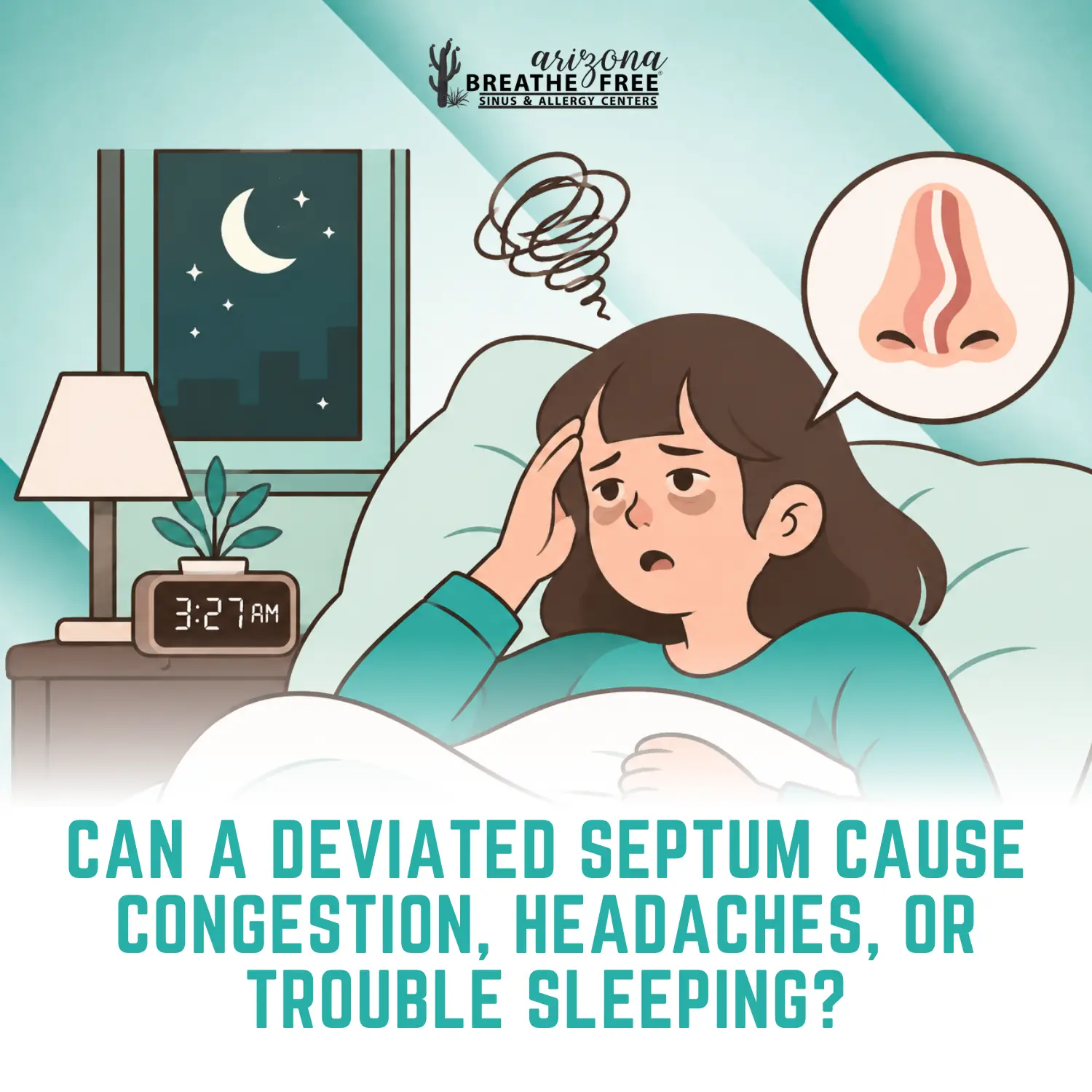
Imagine waking up with persistent nasal congestion, breathing difficulties through the nose, headaches, or trouble sleeping that have started to affect your day-to-day activities, routine, work, productivity, sleep, and comfort.
You turn to Dr. Google and find out a lot about a deviated septum. Now you’re asking yourself, “Do I have a deviated septum?” And the more important question: “Does a deviated septum cause nasal congestion, headaches, or trouble sleeping?”
Persistent nasal congestion, headaches, and difficulty sleeping can result from a variety of factors. A consultation with your ENT care provider can help assess your symptoms and determine if a deviated septum may be a contributing factor.
Here at Arizona Breathe Free, we help patients in Scottsdale and Phoenix, AZ, understand what a deviated septum is and whether it may be contributing to nasal congestion, headaches, or trouble sleeping.
What Is a Deviated Septum?
A deviated septum is an anatomical variation in which the nasal septum, the thin wall of bone and cartilage that separates the nose into left and right nostrils, is off-center and misaligned.
Most people have a nasal septum that’s a little off-center, but not all cases cause significant symptoms, which is why many people don’t even realize that they have one.
However, a more pronounced or severe deviation can impact nasal airflow and make it difficult to breathe through the nose. It may also make one more susceptible to other sinus and nasal problems.
What are the common symptoms of a deviated septum?
Symptoms of a deviated septum vary per patient. Common signs to be on the lookout for include:
- A nose that looks off-center, or nostrils that look uneven
- Persistent nasal congestion
- Difficulty breathing through the nose, which is usually worse on one side
- Headaches
- Facial pain or pressure
- Loss or reduced sense of smell
- Snoring
- Noisy breathing
- Frequent nosebleeds
What causes a deviated septum?
Some people are born with a deviated septum. A complicated delivery can cause trauma or injury to the nasal septum, and as the child grows, the nasal septum can sometimes lean more toward one side. This is a common cause of a deviated septum.
In other cases, some people can develop a deviated septum due to an injury or trauma to the nose, such as a broken nose, sports, or falls.
Can a Deviated Septum Cause Nasal Congestion?
Yes, a deviated septum may contribute to persistent nasal obstruction, commonly associated with nasal congestion.
When the nasal septum leans toward one side, it can reduce the space available for air to pass through the nasal passage. This can create a persistent sense of blockage or congestion, even without an active cold, flu, or sinus infection.
Moreover, a deviated septum can make one side or nostril feel more blocked and congested than the other because the nasal septum leans toward one side, causing more blockage on one side than the other.
However, a deviated septum is not the only contributing factor to nasal congestion. It may be more noticeable when accompanied by other conditions, such as:
These conditions can cause overlapping symptoms, which is why an ENT evaluation is important to determine whether a deviated septum, another structural issue, or some other underlying condition may be contributing.
Can a Deviated Septum Cause Headaches?
Yes, a deviated septum may contribute to certain types of headaches or facial discomfort in some patients. However, headaches alone are not a reliable factor to diagnose a deviated septum.
A significant or severe septal deviation may cause contact between the structures inside the nose, which may be a possible contributor to certain headache patterns or facial pain and discomfort.
Moreover, some patients with severe septal deviation may have other sinus conditions that may also contribute to facial pressure and headaches.
Headaches and facial pressure may develop for many reasons, other than a deviated septum:
- Migraine
- Sinus swelling and inflammation
- Tension-type headaches
- Temporomandibular joint (TMJ) disorders
- Allergies
- Nasal polyps
- Stress
- Other neurological or medical conditions
It’s important not to assume that recurring headaches are automatically linked to a deviated septum, just because both conditions are present at the same time. An ENT consultation can help determine whether a deviated septum is contributing to facial pain and headaches.
Can a Deviated Septum Cause Trouble Sleeping?
Yes, a deviated septum may contribute to sleeping difficulties, particularly when nasal obstruction makes it difficult or uncomfortable to breathe through the nose during sleep.
When nasal airflow is impaired, some people may resort to mouth breathing during sleep, which may contribute to symptoms such as:
- Snoring
- Dry mouth
- Irritated or sore throat
- Disrupted sleep patterns
- A sensation of not getting enough air through the nose
- Difficulty finding a comfortable position to sleep
However, these symptoms do not automatically mean that a deviated septum is responsible.
What Are the Common Treatment Options for a Deviated Septum?
Some mild cases of septal deviation won’t typically need treatment, especially if it causes few to no symptoms. However, cases that may be causing significant symptoms may require treatment.
Treatment options vary, depending on the severity of the condition, symptoms, and other contributing factors. Treatment may include:
- Medications, such as decongestants, antihistamines, and nasal sprays, may help address some mild symptoms resulting from a deviated septum. However, these do not correct a deviated septum.
- Septoplasty is a surgical treatment option that is designed to correct or modify the nasal septum. If symptoms are severe, persistent, or unresponsive to standard medications and treatment options, your ENT care provider may recommend or start discussing the possibility of septoplasty.
Conclusion: Understanding a Deviated Septum With Arizona Breathe Free
Arizona Breathe Free provides ear, nose, and throat care services for patients in Scottsdale, Phoenix, and nearby Arizona communities. Schedule a consultation with our team to learn more about septal deviation and whether a deviated septum may be contributing to persistent nasal congestion, headaches, and sleeping troubles.